
“Proposed reforms to the federal government’s wiretapping powers must protect the Constitution while providing industry with clear rules regarding under what circumstances it must aid government surveillance efforts”, CCIA President & CEO Ed Black told a Senate panel this morning.
Black also testified against retroactive immunity for telecommunications companies who allegedly illegally spied on Americans at the government’s request, arguing that promises of immunity would allow government agents to coerce other companies into illegal acts in the future.
“The Internet is an unprecedented and unique force for democratic change and socio-economic progress,” Black said in prepared remarks. “Increasingly, our nation’s digital economy depends on the dynamism and openness of the Internet. That functionality is jeopardized if surveillance activities result in the chilling of free speech. Internet functionality is further jeopardized if end users lose confidence in the security of their business and personal transactions online. The Fourth Amendment is key to preserving that privacy and network security.”
Black urged the Committee to reject attempts to grant retroactive immunity to companies that may have violated U.S. law in their surveillance efforts on the government’s behalf. Congress, he said, should limit damages available to plaintiffs rather than letting courts dismiss lawsuits that could bankrupt defendants.
“To be sure, the Director of National Intelligence (DNI) requires the assistance of private communications companies. But those companies must be free to insist on constitutionally solid procedures that are clear and transparent, so they are not reduced to guesswork about the applicability of immunity under the FISA statute,” Black said. “Clear lines of separation and differentiation between public sector and private sector roles in surveillance activities are therefore essential to a robust Internet and a free society. Congress must establish bright, constitutional lines identifying industry’s responsibility.”
For copies of the testimony click here.
To view webcast of testimony please follow instructions from Committee Site here.
News
April 23, 2026
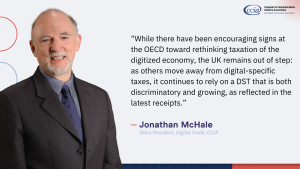
CCIA Comments in Response to UK Publishing its Annual Digital Service Tax Collection Amounts
London – Today, the UK’s HM Revenue and Customs published its annual tax receipts for 2025-26, including the total amount made payable to its digital services tax (DST), which totalled £944m (aro...
News

April 23, 2026
DMA Reality Check Needed as First Review of EU ‘Gatekeeper’ Law Approaches
Brussels, BELGIUM – With the European Commission’s first formal review of the Digital Markets Act (DMA) expected in the coming days, the tech sector is calling for a rigorous, evidence-based asses...
News
April 22, 2026
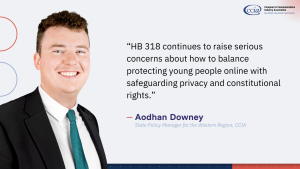
CCIA Continues to Raise Concerns with Alaska Social Media Bill HB 318
Washington – As Alaska lawmakers continue to consider HB 318, the Computer & Communications Industry Association is urging careful review of the proposal, citing ongoing concerns about its impac...